

A Montessori Preschool Built for the Whole Child
Our Mission
At Seneca Village Montessori School, our mission is simple: to give every child a strong, joyful start.
Through the Montessori method — a time-tested, research-backed approach to early childhood education — we honor each child’s individual pace, curiosity, and potential. Our carefully prepared classrooms invite children to explore, discover, and grow in an environment where they feel safe, seen, and capable.
We serve children ages 2–5 in Crown Heights, Brooklyn, and we have been doing so since 2017.
Our Philosophy
We believe children learn best when they are trusted. When given the right environment, the right materials, and the right guidance, young children demonstrate remarkable capability — and we have seen it every day for nearly a decade.
Our philosophy is grounded in four core beliefs:
- Every child deserves to be seen as a whole person — intellectually, socially, emotionally, and physically.
- Independence is built, not given. We create conditions that allow children to develop real confidence and self-direction.
- Community matters. Strong family partnerships and a connected school culture make the difference between a good school and a great one.
- Education should reflect the world children live in. Our culturally rich and inclusive curriculum ensures every child sees themselves represented, valued, and celebrated in their learning environment.
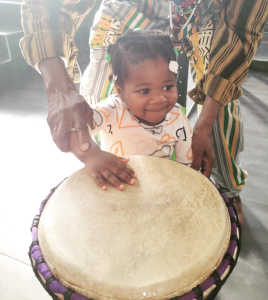
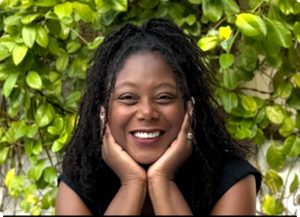

Message From Our Founder
Greetings Family,
I am thrilled and honored that you are considering Seneca Village Montessori School as a place for your child to grow and thrive. Choosing a school is a significant decision, and I understand the process can be overwhelming. It is my hope that you will find our school to be a welcoming community where your child will feel valued, loved, and appreciated.
At Seneca Village Montessori, we are dedicated to nurturing the total child. Our program is carefully designed to foster a positive sense of self, self-acceptance, and pride in one’s achievements. We aim to unlock each child’s creative potential and support their social development in a caring environment.
What makes SVMS truly unique is our blend of the Montessori method with an African-centered approach to learning. This combination ensures that our students not only receive a solid foundation in essential academic skills but also develop a deep connection to their cultural heritage, giving them the best of both worlds.
We believe in the adage that “it takes a village to raise a child.” At Seneca Village Montessori, we strive to create a strong, supportive network among parents, teachers, and students. This community helps nurture each child’s potential, benefiting all who join our village.
I look forward to welcoming you to our school and to partnering with you in this educational journey.
Asante sana (Thank you very much),
Sharifa Hodges
Mama Sharifa Hodges, MsEd
Why Families Choose Seneca Village Montessori ?
Families come to Seneca Village Montessori from all over Brooklyn — and stay because of what they find here.
- Authentic Montessori methodology with trained, dedicated educators
- Small class sizes and individualized attention
- A warm, inclusive community where children feel genuinely known
- A curriculum that nurtures academic, social, emotional, and creative development
- Consistent, transparent communication with families
- A proven track record — our graduates go on to thrive at some of Brooklyn’s most respected schools

The Proud History Behind Seneca Village
Central Park’s landscape near the West 85th Street entrance looks much like the rest of the Park, featuring rolling hills, rock outcrops, and towering trees. However, this area is anything but ordinary. Nearly 200 years ago, this was the site of Seneca Village, the largest community of free African-American property owners in antebellum New York.
The story of Seneca Village begins in 1825, when Andrew Williams and Epiphany Davis became the first African Americans to purchase land in the area, which stretched from West 82nd to West 85th streets between Seventh and Eighth Avenues. Within a week of these initial purchases, the Trustees of the AME Zion Church purchased eight lots of nearby land. By 1829, nine relatively substantial houses had been built in the area.
The village was built in a desirable location, with proximity to the Hudson River’s ample fishing opportunities and to a natural source of clean water at a nearby spring. The village’s residences ranged from one-room homes to three-story dwellings made of wood and brick, and there are records of three churches and one school in the village as well. The 1855 census indicated that Seneca Village was home to approximately 250 residents and contained 70 houses. Life in Seneca Village was rural and its distance from the bustling streets of Lower Manhattan offered its residents a peaceful life.
Property ownership in Seneca Village provided an important gateway into democracy for African-American men. In 1821, New York State decreed that African-American men were required to possess $250 in property holdings and prove three years of residency in the state in order to be eligible to vote. Many residents became eligible to vote through land ownership in Seneca Village, including a Cooper (barrel maker) named James Hinson. Census data shows that his property, including two lots of land and a two-story residence with an attached shed, was valued at $550. (Hinson had originally purchased his property for $325.)
Through the 1830s and 1840s, Seneca Village continued to grow and came to include more Irish and German immigrants among its residents. But when the New York State legislature approved the creation of a Central Park in 1853 and designated the land on which it would be built, the future Park’s footprint included the Seneca Village site. Seneca Village residents were not the only people affected by the plan for Central Park, as nearly 1,600 people lived on the tract of land — though Seneca Village was the most densely populated area of the future parkland.
To create Central Park on land that was already occupied, the New York State legislature authorized the use of “eminent domain,” the power of a government to take private land for public use, with compensation paid to the landowner. This was common practice in 19th century urban America, and a similar use of eminent domain had been used to build Manhattan’s grid system decades earlier. This public acquisition of private land began in 1856, and those owners living within the boundaries of the proposed park were compensated for their property. Many protests were filed in New York State Supreme Court, as is often the case with eminent domain when owners contest the amount of settlement. Ultimately though, all of the residents moved from the land and the community never cohesively established itself in another location.
Despite its short history of only thirty-two years, Seneca Village should be remembered as a strong community that served as a stabilizing and empowering force in uncertain times. For example:
In 1855, there were 2,000 African Americans in New York and only 100 were eligible to vote. Of those 100 residents, 10 lived in Seneca Village.
Within Seneca Village, 50% of African-American residents owned their own land; which was five times the average ownership rate for ALL New Yorkers.
Several Seneca Village property owners, including Albro Lyons, Levin Smith and S. Hardenburgh, were prominent in the abolitionist movement.